
The title of this post promises that a raw diet makes weight loss easy. The raw menu in the older version of this post leaned on plant foods, and plant-based diets have been tested against ordinary diets in randomised trials. Those trials are a fair place to check the promise, even though neither of the two studies below tested a raw diet.
Twelve trials pooled together
In 2016 Huang and colleagues published a meta-analysis of randomised controlled trials in the Journal of General Internal Medicine (PubMed 26138004). They found 12 trials with 1,151 people in total, and the diets ran for a median of 18 weeks.
People assigned to vegetarian diets lost 2.02 kg more than people assigned to non-vegetarian diets, with a 95% confidence interval of 2.80 to 1.23 kg. Vegan diets showed a 2.52 kg difference. Lacto-ovo-vegetarian diets, which keep eggs and dairy, showed 1.48 kg, but that interval ran from a loss of 3.43 kg to a gain of 0.47 kg, so it crosses zero.
The gap shrank with time
Trials that followed people for under a year showed a 2.05 kg difference. Trials of a year or longer showed 1.13 kg. The authors wrote that further long-term trials are needed to look at what these diets do to body weight.
About two kilos over a median of 18 weeks is a real result, but it is a long way from easy weight loss. It is also an average difference between groups, not a figure any one person can expect.
Five diets in one South Carolina study
A trial by Turner-McGrievy and colleagues at the University of South Carolina, published in Nutrition in 2015 (PubMed 25592014), compared five diets side by side over six months. Overweight adults were randomised to a low-fat, low-glycaemic index diet in one of five forms: vegan (12 people), vegetarian (13), pesco-vegetarian (13), semi-vegetarian (13) or omnivorous (12). The diets did not emphasise cutting calories. Fifty people, or 79%, completed the study.
At six months the vegan group had lost 7.5% of body weight on average. That was significantly more than the omnivorous group at 3.1%, the semi-vegetarian group at 3.2% and the pesco-vegetarian group at 3.2%. The vegan group also cut fat and saturated fat more than those three groups.
There are two limits worth knowing. Each group had only 12 or 13 people. And the omnivorous group met monthly with weekly email lessons for the first two months, while the others had weekly group meetings, so the groups did not get the same amount of support. The authors concluded that vegan diets may lead to greater weight loss than more modest advice.
What this says about the raw promise
Neither paper tested a raw diet. The closest they get is the vegan arm, which removes all animal foods. So these results say something about plant-based eating and nothing direct about raw food, because no group in either study was compared on raw versus cooked meals.
The raw menu in the older post was not vegan. It included organically raised raw egg blended into a glass of freshly squeezed vegetable juice, and neither study tested a menu like it.
Where dates fit
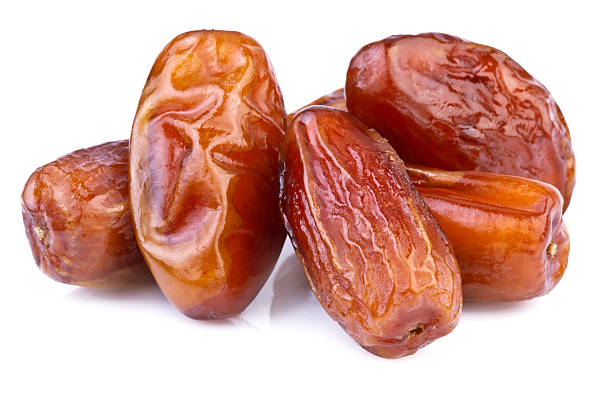
The older post also described a raw chocolate cake held together by Medjool dates. USDA FoodData Central lists Medjool dates at 277 kcal, 6.7 g of fibre, 1.81 g of protein and 0.15 g of fat per 100 g. Neither trial abstract names the fruits on its menus, and neither study looked at dates. The South Carolina diets did not emphasise cutting calories. If dates go into a raw cake, 277 kcal per 100 g is the figure worth knowing.

The link from the older post
The older post suggested nuts, almonds in particular, as a savoury snack and pointed readers to another page. That link is kept here for anyone who wants to find more information.
Ordering dates from Sayer Dates
The Sayer Dates about us page says the business handles everything from retail purchases to wholesale supply and delivers across Malaysia. Enquiries, quotes and orders go through WhatsApp, and the number is on the contact us page. More articles are on the Sayer Dates blog.
This article is general information, not personal advice. If you plan a big change to the way you eat, speak to your GP or a dietitian first.