
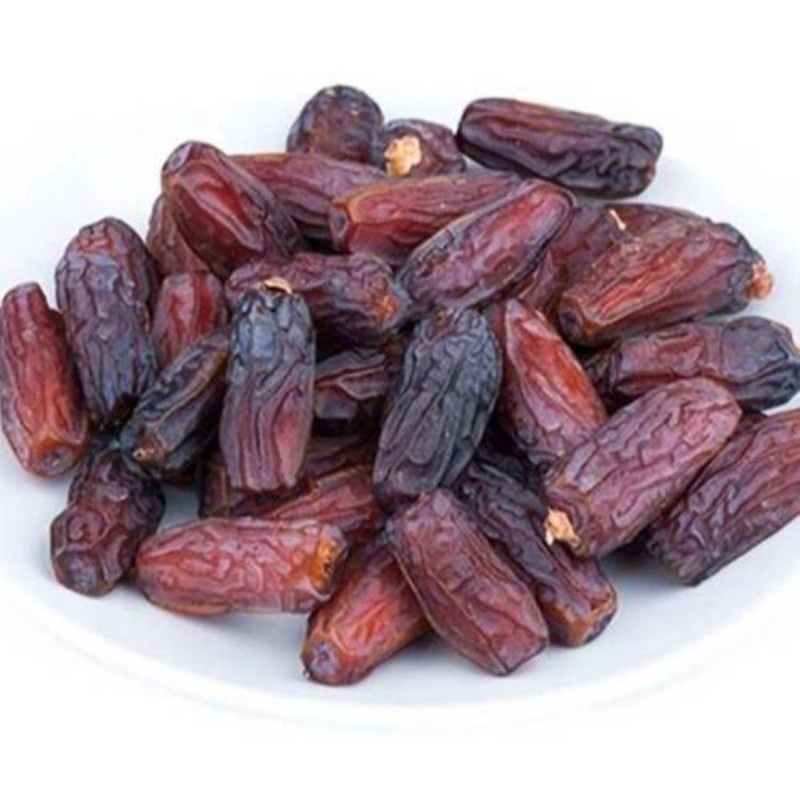
Most dates sold in Malaysia never see a Malaysian tree. They're grown in the Middle East or North Africa, picked at some stage of ripeness, then shipped here weeks or months later — which is why "fresh" and "dried" mean something a little different on our shelves than they do at the farm gate. Buah kurma importers generally bring in two broad categories, and knowing what actually separates them helps you buy the right one for what you're making.
What "fresh" means once a date has travelled
A date goes through four stages on the tree: kimri (unripe, green), khalal (crisp, yellow or red, still firm), rutab (soft, brown, partly cured) and tamr (fully dried). What most shops label "fresh dates" in Malaysia are usually rutab-stage or vacuum-packed soft tamr — not the crunchy khalal stage you'd eat in a Gulf orchard in September. That khalal stage barely survives shipping; it turns to rutab within days. So when a Malaysian supplier says "fresh," they usually mean soft, moist, and higher in water content than the fully dried version — not "picked yesterday."
That moisture is the whole story. A rutab-stage date can carry 30–40% water; a properly dried tamr sits closer to 15–20%. Everything else — texture, shelf life, how the sugars taste — follows from that one number.
Why dried dates still dominate the shelves
Dried dates travel and store without a cold chain, which matters a lot for a country that imports almost all its dates. The lower moisture concentrates the natural sugars, so a dried Deglet Noor or Safawi tastes noticeably sweeter and firmer than the same variety at rutab stage. This is also why fresh or dried dates get marketed so differently — dried varieties are pitched on convenience and year-round stock, softer ones on texture and a shorter selling season.
Dried dates are also the only practical option for cooking. If you're making date paste, stuffing, or baking, you want the lower moisture and firmer flesh — a soft rutab-stage date turns to mush and throws off your liquid ratios.
Telling them apart before you buy
A few practical checks, not marketing claims:
- Weight and stickiness — a moister date feels heavier for its size and leaves a wet residue on the packet; a well-dried one feels light and the skin looks matte, sometimes with a faint sugar bloom (white specks) that's just crystallised sugar, not mould.
- Skin colour — deep brown to near-black usually signals a fully cured date; a date still showing yellow or red patches is closer to khalal/rutab stage and won't keep as long.
- Give — press gently. Rutab-stage dates yield easily; tamr-stage dates have more resistance and a slight chew.
Storing each kind
Soft, higher-moisture dates need the fridge and are best eaten within one to two weeks — leave them at room temperature and they'll ferment or grow mould faster than most fruit. Dried dates are far more forgiving: sealed and kept somewhere cool and dry, they hold their quality for several months, which is exactly why they're the practical choice for a household or a business that buys in bulk rather than little and often.
Neither type is "better" outright — a rutab-stage date wins for texture if you're eating it plain, a well-dried tamr wins for cooking, gifting, and stock you don't want to worry about. Buy based on what you'll actually do with it.
If you're sourcing in volume and want help matching the right stage and variety to your use case, our guide to finding a bulk dates supplier in Malaysia and our notes on choosing a reliable dates wholesaler cover what to check before you commit to an order — or you can contact us directly with your requirements.