
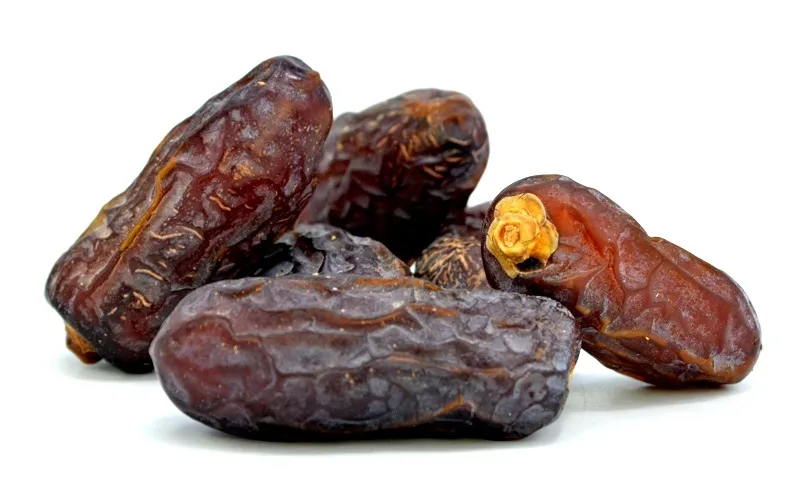
Why Sayer dates behave differently in a hot pan
Most cooks who reach for dates in a savoury dish default to whatever grade is already in the pantry, then wonder why the result is either mushy or scorched. Sayer is a semi-dry grade — firmer and less sugar-slick than Medjool, with a fibrous skin that holds together under heat far longer than the softer varieties. That single trait decides almost everything about how it should be used in cooking rather than eaten straight from the box.
Dry heat: roasting and pan-searing
Because the flesh has less moisture, Sayer dates sear rather than steam. Halve them, remove the pit, and lay them cut-side down in a dry or lightly oiled pan over medium heat for about ninety seconds. The exposed sugars caramelise into a thin, almost lacquered crust while the inside stays intact — a texture a wetter date can't hold, since it collapses into syrup before the surface browns. This is the version to serve alongside grilled halloumi or lamb chops, where a soft date would just melt into the plate.
Moist heat: stews, tagines, and braises
In a slow-cooked dish, timing matters more than the grade. Sayer needs slightly longer in the pot than Medjool — closer to twenty-five minutes than fifteen — because its firmer structure resists breaking down. Add it too early in a quick-cooking curry and it stays tough; add it at the right point in a two-hour tagine and it softens to a texture close to a dried apricot, contributing sweetness without turning the sauce syrupy. Two to three chopped dates per litre of liquid is a reasonable starting ratio for four servings before tasting and adjusting.
No heat: raw preparations
Sayer's firmness is actually an advantage raw. It slices cleanly instead of tearing, which matters for a salad where you want distinct pieces rather than sticky fragments — arugula, shaved fennel, and a hard sheep's-milk cheese pair well, since the date supplies sweetness without adding the wetness a softer grade would. For a blended chutney or salsa, soak chopped Sayer in warm water or vinegar for ten minutes first; skipping this step leaves gritty, under-hydrated pieces in the final sauce, which is a common mistake with drier grades.
Where the grade doesn't work
Sayer is a poor choice for glazes and purées that need to break down into a smooth paste quickly, since its lower moisture and tougher fibre resist blending — a stickier grade reduces the work there. If a recipe calls for a date paste as a binder in baking, it's worth reaching for something closer to Kurma Tangkai or a similar soft variety rather than forcing Sayer through a blender.
Choosing between fresh and dried before you cook
Firmness also shifts with how the fruit was processed — a point covered in more depth in our fresh vs. dried comparison, worth reading before deciding which batch to buy for a specific dish. And if the interest is less about today's recipe and more about where Sayer dates come from and how the harvest affects quality, our Iranian Sayer dates page and our note on Sayer in desserts cover the sweeter side of the same fruit. Start with a small pack from the Sayer Dates home page to test how a grade behaves in your own kitchen before buying in bulk.