
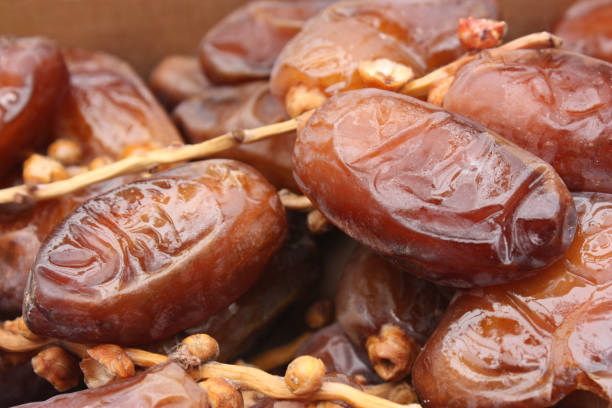
Kurma tangkai shows up on shelves for a few weeks every year, right before Ramadan, and then disappears again. That timing is the first thing worth understanding about kurma tangkai: it isn't a separate fruit from the loose dates sold the rest of the year, it's the same dates left attached to the woody stem instead of stripped off after drying. The stem is what makes it look like a proper centrepiece, and it's also why buying one takes a bit more thought than grabbing a box off the shelf.
What you're actually paying for
A tangkai bunch is priced as a unit, not by the piece, and the stem itself can be a third of the total weight depending on the variety. That means the per-kg price looks higher than loose dates even when the fruit inside is the same grade — you're paying for presentation and for the extra handling of packing dates without stripping them first. If a stall can't tell you the net fruit weight versus the gross bunch weight, ask; a fair seller will know the difference off the top of their head.
Keeping a bunch looking good after you buy it
This is the part most buyers get wrong. A tangkai bunch bought two weeks before Ramadan for gifting or as a table centrepiece needs to survive that long without the fruit shrivelling or the stem going brittle and dropping dates. Keep it out of direct aircon flow and away from a sunny windowsill — both dry the stem faster than the fruit inside. If you're not displaying it immediately, a loose paper wrap in the fridge holds it in better shape than leaving it out on a counter for a fortnight. Once the stem starts turning a dull grey-brown and feels papery rather than springy when you flex it, the bunch is past its best even if the dates themselves still taste fine.
Decoration first, snacking second
Most households buying tangkai are buying it to look good on a table during open houses, not as their everyday snacking stock — that's usually a separate box of loose dates, and dates suppliers stock both for exactly that reason. If you do plan to eat straight off the bunch, pull dates from the underside first; the top-facing fruit gets the most light and dries out quicker, so it's better used last or left for show.
Why it only shows up for a few weeks
Supply is tighter than loose dates because the bunches are cut, dried and packed as a single unit at origin months in advance — there's no quick reorder mid-season once a shipment sells out. That's the real reason tangkai feels like a seasonal item rather than a shelf staple: it isn't marketing, it's a harvest and packing schedule that only lines up with Ramadan demand once a year.
If tangkai isn't in stock when you need it, a wholesale box of loose dates covers the same fruit without the seasonal scramble — worth checking a wholesale date pricing guide before you commit to a specific format, and if you're buying for an open house or hantaran, our guide to dates in Malaysian celebrations covers presentation options beyond the bunch itself.