
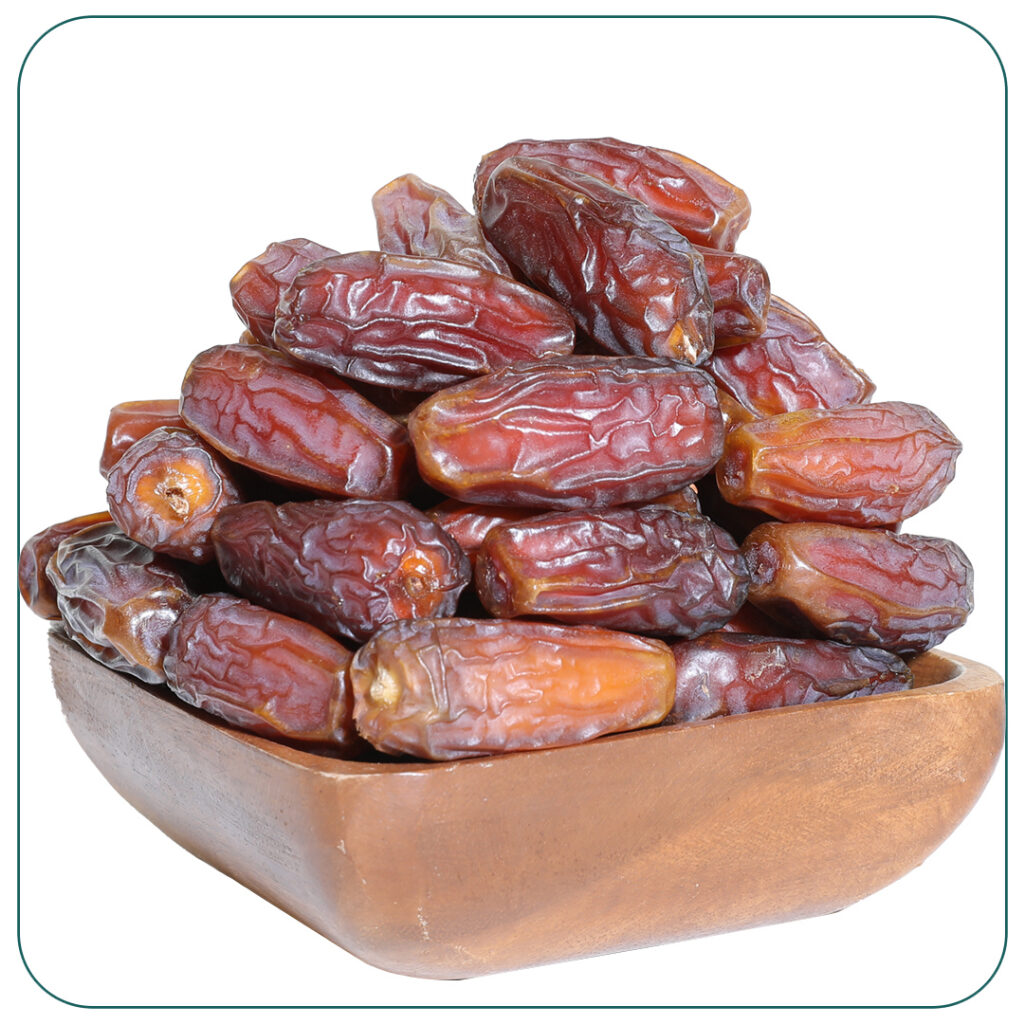
Kurma Mariami shows up in Malaysian kitchens for reasons that have nothing to do with the health claims attached to older marketing copy. This retailer carries Kurma Mariami Malaysia, and most repeat buyers are cooking with it, not medicating with it.
Where it actually gets used
Its soft, semi-dry texture makes Mariami easier to blend than fully dried varieties — pit it, soak briefly in warm water if it's on the firmer side, then purée for date syrup or paste. That paste turns up in kuih fillings, as a natural sweetener stirred into oat porridge, or blended into smoothies where a drier date would leave gritty fragments. Dates with this texture also stuff more easily than firm varieties — halved, pitted, and filled with almond or cream cheese, they hold their shape without cracking.
Why texture, not health claims, should guide the recipe
A firmer date like Deglet Noor works better sliced into salads or rice dishes because it keeps its shape under heat. Mariami's softness is the wrong texture for that — it collapses into the dish instead of staying distinct. Matching the variety to the recipe matters more than any claimed health property, because the wrong texture ruins a dish regardless of what's written on the packaging.
Buying enough for actual cooking
Home cooks planning to use Mariami in baking or paste-making tend to buy more than snacking buyers do, since a batch of kuih or a jar of date paste eats through a box quickly. Its composition — high natural sugar, low moisture relative to fresh fruit — is also what makes it a stable pantry ingredient rather than something that needs refrigeration the moment it's opened, though it keeps longer chilled.
Check the batch before buying in bulk: a few dates should be pliable, not sugar-crusted or hard at the tip, which is usually a sign of age rather than a different grade. Buying from a seller who turns over stock regularly beats buying whatever's cheapest that day.