
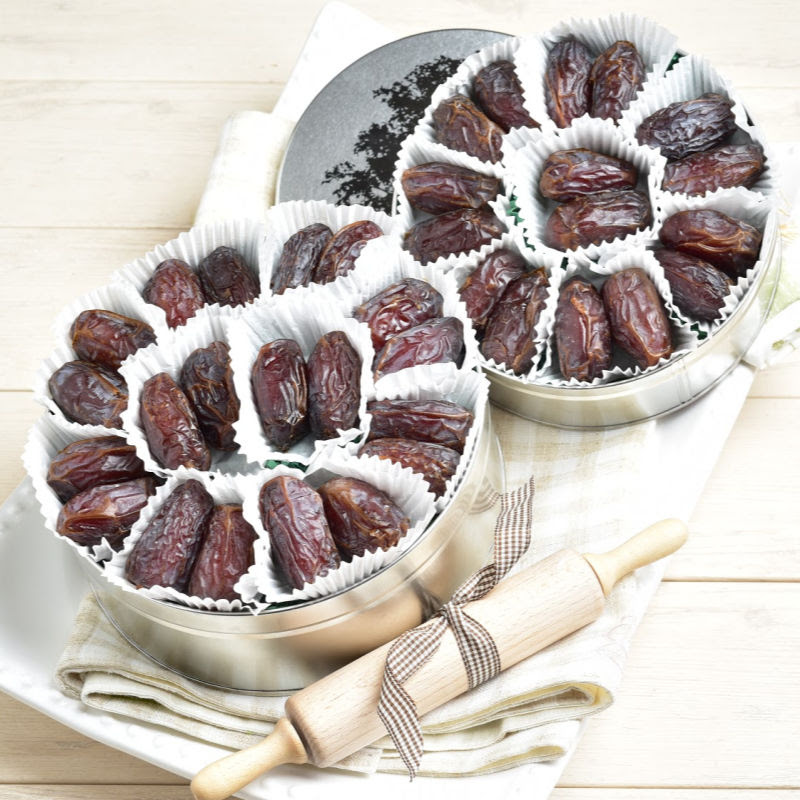
Medjool dates sell at a different price point than most dried fruit in a Malaysian pantry, and that gap is the actual story worth explaining — not just that they're "the king of dates." Once you know why a Medjool costs what it costs, the rest of the dried-fruit shelf makes more sense too.
Why one Medjool costs what a handful of raisins costs
A single Medjool piece can weigh 20-25g. A serving of raisins that size is a small handful, not one piece. That's the first thing driving the price difference — you're buying weight and size, not just a name. Add the harvest labour (each Medjool is often hand-picked at the right ripeness stage) and the cold-chain handling needed to keep that soft flesh intact from farm to shelf, and the per-kilo price stops looking like a markup and starts looking like a cost breakdown.
Where Sayer dates sit in that same conversation
Sayer dates don't try to compete with Medjool on size or softness — they're smaller, firmer, and priced for everyday use rather than gifting. If Medjool is the occasional splurge for hampers or a special guest, Sayer is the one you keep in the pantry for daily snacking or cooking into a paste. Same fruit family, different job. A Sayer dates supplier guide covers this trade-off in more depth if you're buying for a household rather than one box.
Raisins, cranberries and dried apricot — a quick comparison
Raisins are the cheapest of the group and the most neutral in flavour, which is why they disappear into baking without a fight. Cranberries bring tartness and a deeper red colour, useful when a dish needs contrast rather than more sweetness. Dried apricot sits closer to Medjool in chewiness but has a sharper, slightly acidic edge that dates don't have. None of the three replace a date in texture — they're firmer and drier once you bite in, while a good Medjool or Sayer date should still feel moist.
A simple way to pick, budget by budget
For a hantaran box or a gift tray, Medjool earns its price — presentation matters and the size shows. For everyday snacking, cooking, or filling a jar at the office, Sayer dates do the job at a fraction of the cost, and demand for dates fruit tends to spike hardest right before festive seasons, so buying a mixed stock of both ahead of time avoids paying peak-season prices for either. Raisins and cranberries are the backup when you're baking in bulk and don't need the date itself to be the centrepiece. Buying a 10kg wholesale box ahead of the rush is usually cheaper than topping up small packs closer to the festive date.
What to check before you buy either one
Look at the skin: a Medjool or Sayer date with a dry, cracked skin has likely been sitting too long in a warm display. Press it gently — it should give slightly, not feel hard or sticky-wet. Buying from a supplier who turns over stock fast matters more than the country of origin printed on the box.