
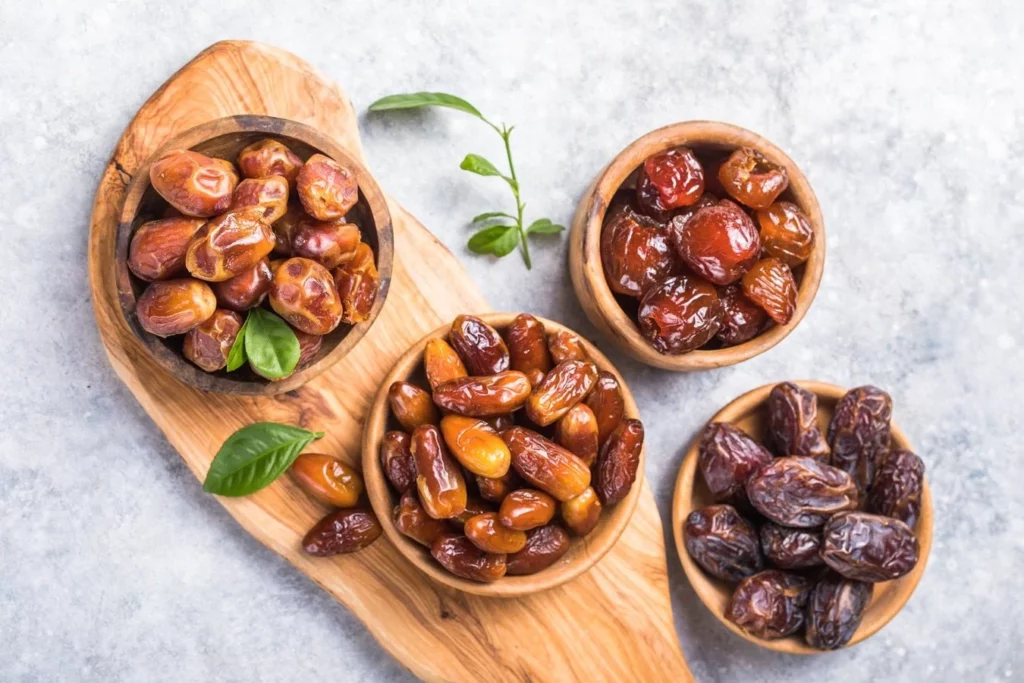
Sayer dates come from Bam and Kerman in Iran, and they are semi-dry, not fully dried like Deglet Noor or fully soft like Medjool. That middle texture is the whole point of the variety, and it changes what you can do with them. This post is about the Sayer date itself, not dates in general — where the sugar sits in the flesh, why it stores differently, and where it actually earns its place in a Malaysian kitchen.
What makes a Sayer date a Sayer date
The flesh is dense and a little fibrous compared to Medjool's soft caramel bite. Skin colour runs dark amber to brown, and a good batch has a slightly wrinkled but not dried-out surface — if it looks glassy and rock-hard, it has been over-dried in storage. Sayer sits closer to Rabbi and Zahedi on the dry-to-soft spectrum than it does to Ajwa or Mazafati.
Sugar content is high, mostly glucose and fructose rather than sucrose, which is common across dried and semi-dried date varieties. The fibre in the flesh slows how quickly that sugar reaches the bloodstream — a plain fact about food composition, not a health claim, and it applies to most whole dates, not just Sayer.
Why Sayer works for paste and syrup where soft varieties don't
Fully soft dates like Medjool break down into paste almost on their own. Sayer's firmer, less sticky texture is actually an advantage for cooking: it holds together when chopped, doesn't gum up a food processor blade, and blends into a smoother paste with less added liquid. That's why you'll see Sayer used in date syrup (dibs) production and in fillings for kuih and pastries where you want sweetness without the paste turning to mush.
For raw eating, chop it small or soak it 10–15 minutes in warm water first — the semi-dry texture is less forgiving straight out of the pack than a Medjool.
Storage: the part people get wrong
Semi-dry dates have more moisture than fully dried Deglet Noor, so they mould faster at room temperature in Malaysian humidity. Keep an unopened pack in a cool, dark cupboard for a few weeks at most; once opened, move it to the fridge in an airtight container and it holds for two to three months. For anything longer, freeze it — Sayer freezes well because the lower moisture means less ice-crystal damage to the flesh compared to a very soft variety.
Check before buying: press gently near the stem end. It should give slightly, not feel rock-hard, and there should be no white sugar bloom crusting the skin — that's a sign of poor storage temperature swings, not spoilage on its own, but it's a batch to skip if you have a choice.
Sayer next to the varieties you already know
Ajwa is soft, dark, and mostly comes from Madinah. Medjool is large and very soft, mostly Palestine or Jordan. Mazafati is soft with high moisture, from Bam like Sayer but a different cultivar entirely. Sayer sits apart from all three — firmer, less sweet per bite because of the lower moisture, and priced lower as a result, which is exactly why it's the one bakeries and paste-makers buy in bulk rather than the one sold as a gift box.
If you're buying for snacking and want the soft-caramel bite, go Medjool or Mazafati. If you're buying to cook, bake, or make your own date syrup, Sayer is the better spend — a smaller price per kilo that still delivers the natural-sugar base you're after. Kurma Malaysia stock across varieties gives you a place to compare Sayer against the softer options before you commit to a bulk order.
Related: natural sugars in dates, choosing a dates wholesaler, and picking a reliable supplier in Malaysia.