
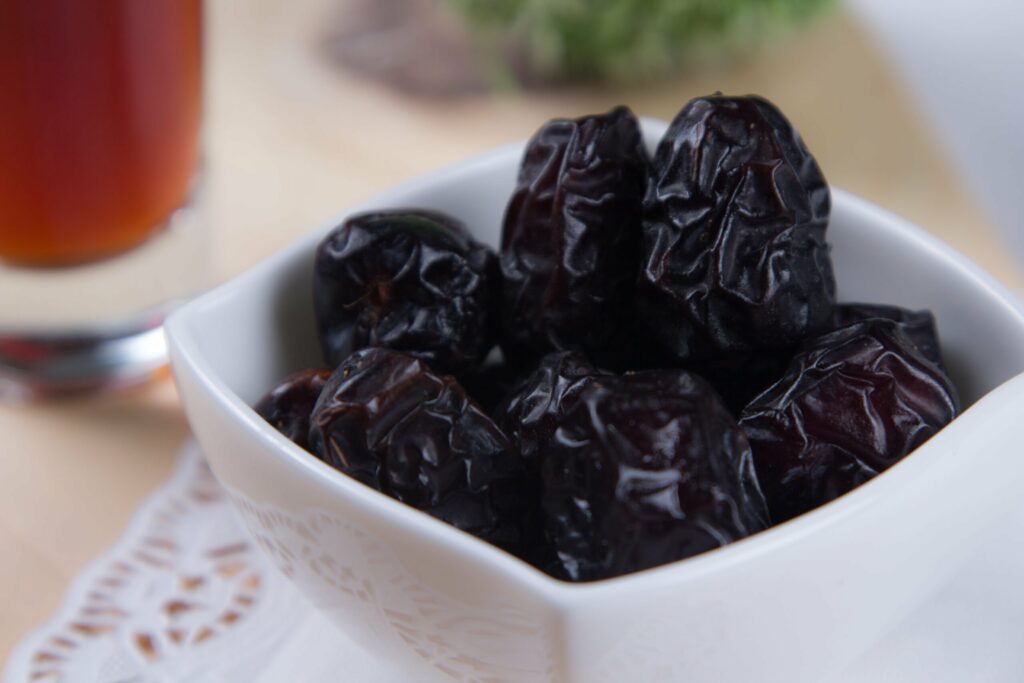
Ask a Malaysian shopper to name a date and you will usually hear Medjool, sold in many shops as Kurma Majol, or Ajwa. Those two, along with Safawi, Deglet Noor and the Iranian soft dates, make up most of what moves through wholesale here. There are hundreds of named date cultivars, though, and a few of them are worth knowing even if you only see them once a year.
The easiest way to understand why they are different is to look at when each one is eaten.
Three stages, three kinds of date
Date growers talk about three main eating stages. Khalal is the firm, crunchy stage when the fruit has turned yellow or red but is not yet soft. Rutab is the half-ripe, soft and juicy stage. Tamar is the fully ripe, dried date that ends up in boxes and lasts for months. Nearly everything sold in Malaysia is tamar, because it ships and stores well. Most of the varieties below are prized at an earlier stage, or for a texture you do not get from the usual imports.
Barhi: eaten crunchy
Barhi is an Iraqi variety, first grown around Basra. Most dates are unpleasantly astringent at the khalal stage, but Barhi is not, so in season it is sold yellow and crisp, often still hanging on the strand. At that stage it is crisp and only mildly sweet. Kept a few more days it softens into a golden rutab. That short window is why it rarely reaches us in its best form.
Sagai: two textures in one fruit
Sagai comes from central Saudi Arabia. The fruit is two-toned when ripe: the base is darker and softer, while the tip stays paler and drier. One bite gives you both. It is a good example of a date bought for texture rather than size or sweetness.
Zahidi and Thoory: the drier side
Zahidi is one of the most widely planted dates in Iraq. It is golden, semi-dry and less sticky than the soft varieties, and it is widely used for date paste and syrup rather than gift boxes, which is part of why the name means little to buyers here.
Thoory, from Algeria, is drier again. It is firm, slightly wrinkled and sometimes called a bread date, with a nutty taste. Algeria is far better known for Deglet Noor, which we cover in our Deglet Noor wholesale guide. Thoory is its plainer, harder neighbour.
Anbara: the Madinah date that is not Ajwa
Madinah is known for Ajwa and Safawi, but it grows other varieties too. Anbara is one of them. It is a large, dark date with a soft bite. It is grown in much smaller quantities than Ajwa, and you are unlikely to find it outside specialist sellers.
Why the common varieties still matter
None of this is a case against the usual names. Medjool, Safawi and Mariami from Iran became staples because they travel well, keep their quality, and suit how Malaysians buy dates for Ramadan and for gifts. If you are deciding between the two big sellers, see our comparison of Safawi and Medjool for a kedai kurma. We also have a separate article on Mariami dates and the claims sellers make about them.
If you come across one
An unfamiliar name on a carton tells you nothing on its own. Ask for the country of origin, the packing date and whether the stock is meant to be eaten soft or dry. Soft fruit needs to be kept cool and eaten quickly. Our guide to fresh and dried dates explains the difference in more detail.